
Highlights and Hidden Architecture from St Stephen’s Green to College Green
This small-group Dublin architecture walking tour explores the city through its buildings, streets, squares and public spaces. Over a route of just over 2 km, you will walk from St Stephen’s Green to College Green, discovering Georgian Dublin, political landmarks, historic hotels, hidden cemeteries, Trinity College views and the civic architecture that shaped the city.
Think of it as Dublin explained through its buildings.
This is a walking tour for curious visitors, culture lovers, history enthusiasts and locals who want to see the city with fresh eyes. Rather than rushing through a checklist of famous sights, this tour uses carefully chosen buildings and streetscapes to tell a wider story of Dublin: power and politics, wealth and society, Georgian ambition, Victorian confidence, Irish independence and the modern city we see today.
If you want something more thoughtful than a pub crawl and more distinctive than a generic Dublin city tour, this experience is designed for you.
Book the Dublin Architecture Walking Tour
Enquire About a Private Group Tour
At a Glance
Tour name: Dublin Through Time: Highlights & Hidden Architecture Walking Tour
Tour type: Small-group Dublin architecture and history walking tour
Route: St Stephen’s Green to College Green
Distance: Just over 2 km
Start point: Near Fusiliers’ Arch, St Stephen’s Green
Finish point: College Green
Duration: 2-3 hours
Group size: Small group, maximum 15 guests
Price: €28.5
Best for: Curious travellers, culture lovers, locals, corporate groups and visitors who want to understand Dublin beyond the surface
Private tours: Available on request
Accessibility: This is an outdoor city-centre walking tour using streets, squares and public spaces. Please contact us before booking if you have access requirements.
What You’ll See on This Dublin Architecture Walking Tour
The route is based on a carefully selected trail of interesting and important buildings in Dublin city center. These are some of the city’s architectural “greatest hits,” with other landmarks, hidden details and overlooked stories pointed out along the way.
You will see elegant Georgian streets, political landmarks, historic hotels, cultural institutions, hidden burial grounds, Trinity College views and some of the most important civic spaces in Dublin. Along the way, your guide will explain how architecture can reveal the story of a city: who held power, who had wealth, what values were being expressed and how Dublin changed over time.
This is not a technical lecture. It is an accessible, story-led Dublin history walking tour that uses buildings as the starting point.
By the end of the walk, Dublin will feel more readable. The buildings will no longer be just façades. They will become part of the story.
Route Highlights: St Stephen’s Green to College Green
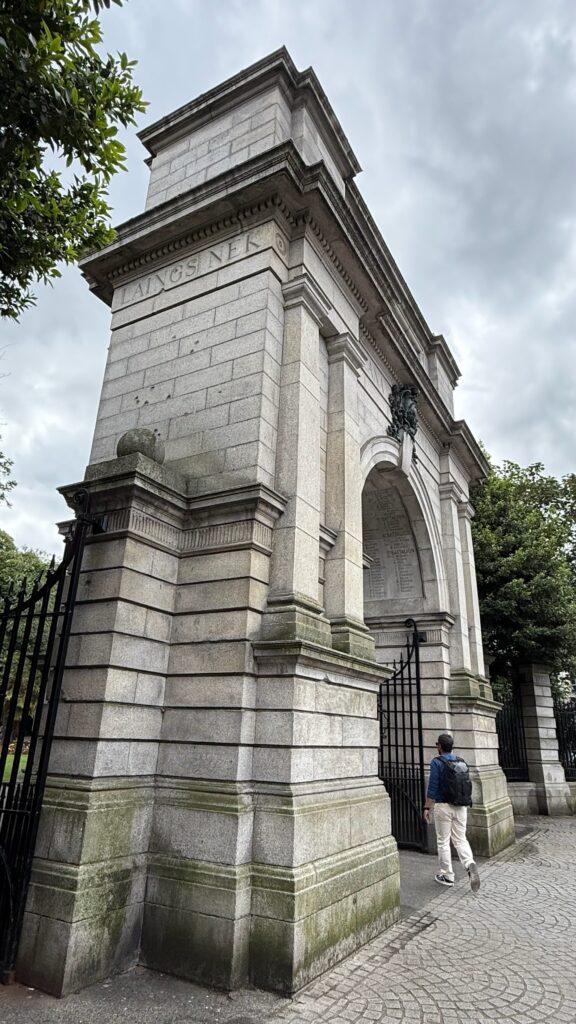
Fusiliers’ Arch and St Stephen’s Green
The tour begins near Fusiliers’ Arch at the entrance to St Stephen’s Green, one of Dublin’s best-known public spaces.
From here, we look at the surrounding cityscape, including Grafton Street, St Stephen’s Green Shopping Centre and the park itself. This opening stop sets the scene for the walk and introduces some of the themes that will return throughout the tour: public space, memory, status, design and the changing identity of Dublin city center.
St Stephen’s Green is more than a park. It is a place where social history, urban planning, politics and architecture meet.
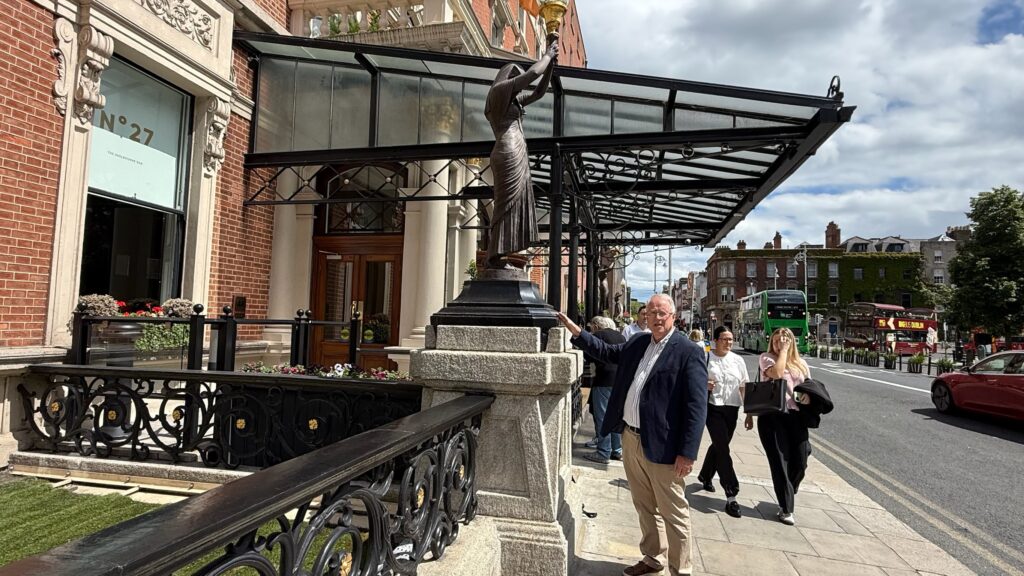
The Shelbourne Hotel
One of Dublin’s most famous hotels, the Shelbourne is also one of the city’s most historically significant hotel buildings.
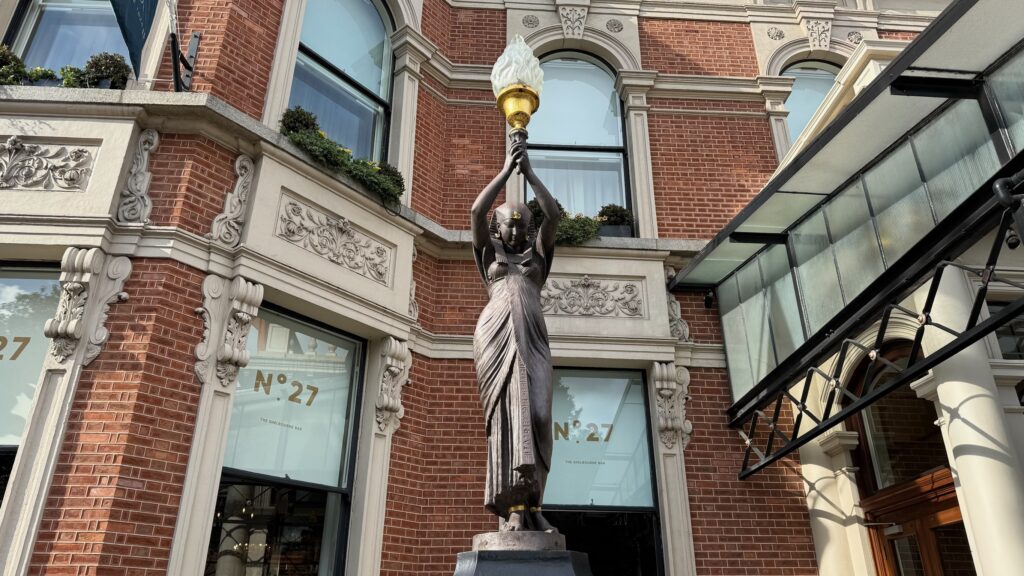
Its Victorian architecture, prominent position and long association with political and social life make it an ideal stop on this Dublin architecture tour. Here we look at how hotels can become part of a city’s public life, acting not just as places to stay, but as stages for important meetings, social rituals and historic events.
The Shelbourne helps us explore Dublin as a capital city, a place of ceremony, confidence and changing identity.
Huguenot Cemetery, Merrion Row
Tucked away on Merrion Row, the Huguenot Cemetery is one of the few surviving historic cemeteries in Dublin city centre.
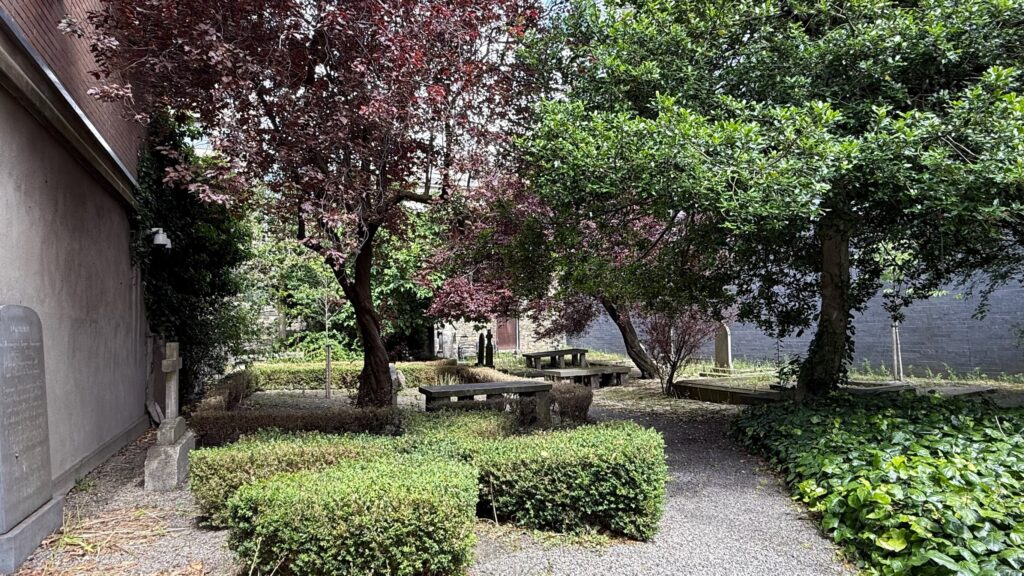
Established in 1693, this quiet and often-overlooked site opens up stories of migration, religion, identity and Dublin’s international connections. It is one of the hidden gems on the route and a reminder that the city’s history was shaped not only by major institutions, but also by communities who arrived, settled and contributed to Dublin life.
This stop offers a quieter, more reflective moment in the walk and shows how small places can reveal large stories.
Government Buildings, Merrion Street
Government Buildings is one of the most striking early 20th-century landmarks in Dublin and now forms a key part of Irish political life.
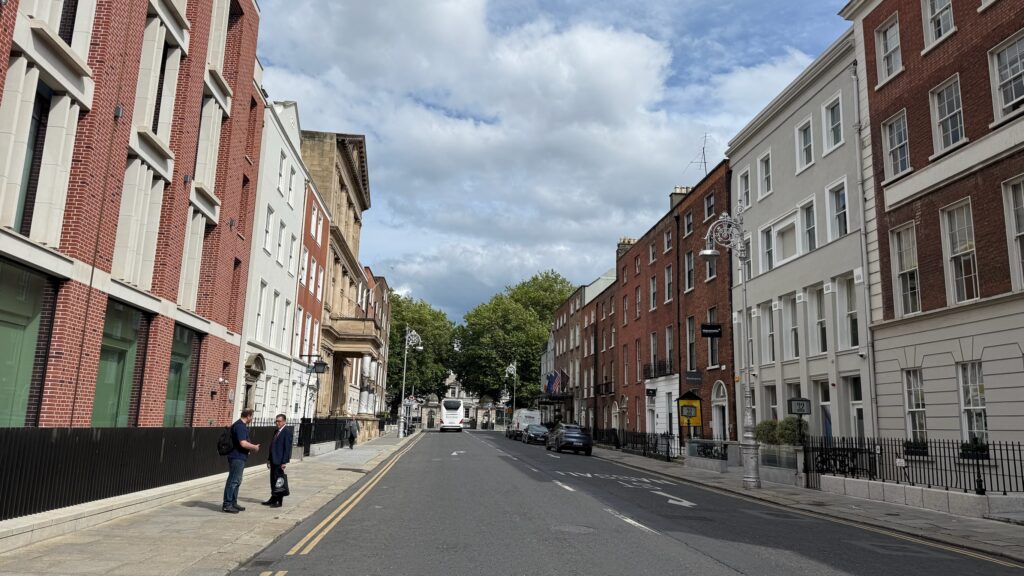
Here we explore architecture as a statement of power, ambition and national identity. The scale, materials and form of the building tell us a great deal about authority and public image. It is a dramatic contrast with the Georgian streets nearby and shows how different periods of Dublin’s development sit side by side.
This stop helps connect architecture with politics, administration and the visual language of government.
The Merrion Hotel Buildings
Opposite Government Buildings, the Georgian townhouses now forming part of the Merrion Hotel date from the 18th century.
These elegant buildings offer a beautiful contrast with the grand civic architecture across the street. They help tell the story of elite Georgian Dublin: its proportions, façades, doors, windows and social world.
This part of the route gives you a chance to slow down and look carefully at the details that make Georgian Dublin so distinctive. The beauty of these streets is not accidental. It comes from rhythm, proportion, craftsmanship and the careful design of urban space.
Leinster House
Built around 1745 as a private aristocratic residence for the Earl of Kildare, later Duke of Leinster, Leinster House is now home to the Irish Parliament.
It is one of the most important buildings on the tour and a perfect example of how Dublin’s architecture reflects changing political power. What began as a private house became a national institution, and that transformation tells a fascinating story about status, authority and the making of modern Ireland.
At Leinster House, we look at how one building can hold several layers of meaning: aristocratic ambition, Georgian elegance, political change and national identity.
Merrion Square South
Merrion Square South is one of the finest Georgian streets in Dublin, with a long stretch of original townhouses laid out in the 1760s.
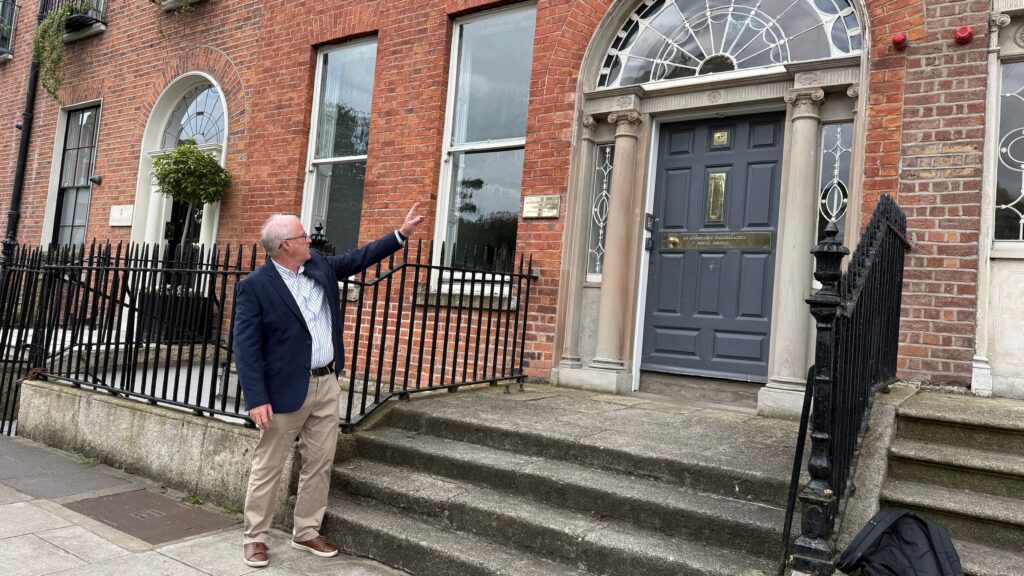
This section of the walk explores Georgian Dublin in more detail. We look at elegant façades, proportions, doors, fanlights, railings and the social world behind the architecture. These houses were designed to impress, but they also followed a shared urban language that gave Dublin some of its most recognisable streetscapes.
For anyone interested in Georgian Dublin, Merrion Square is one of the essential places to understand.
Merrion Square Park
We continue through Merrion Square Park to experience the square from the green space at its centre, as originally intended.
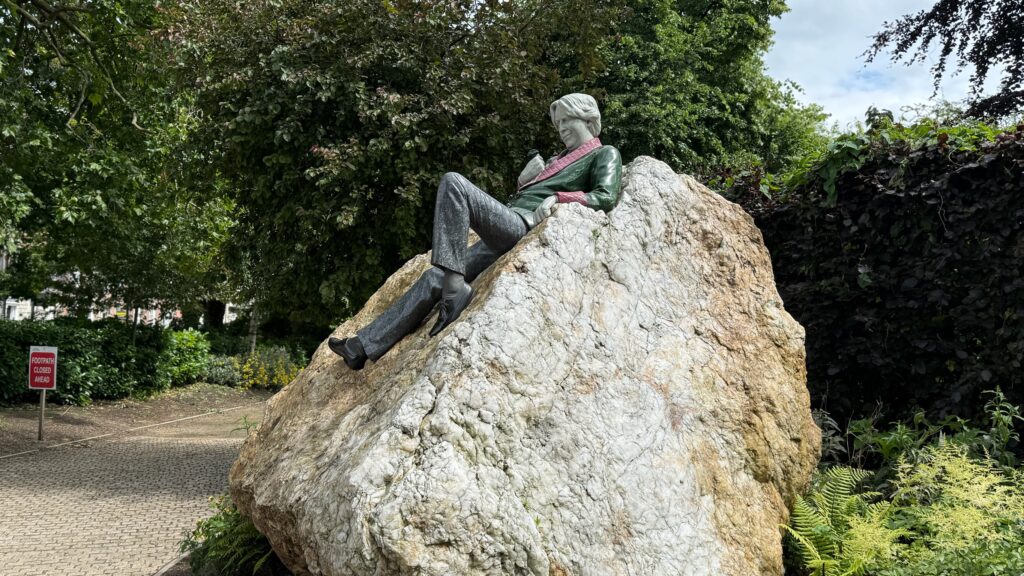
This stop gives a better sense of how Georgian squares were designed, used and viewed. The surrounding houses were not meant to be seen only from the pavement. They were part of a larger urban composition, with private houses, shared green space and carefully controlled views working together.
Merrion Square Park also allows us to consider how historic spaces continue to evolve, serving modern Dublin while still carrying the atmosphere of the 18th-century city.
National Gallery of Ireland
At the National Gallery of Ireland, we look at the relationship between art, public culture and Dublin’s civic architecture.
This part of the city brings together education, art, history, politics and public life. The National Gallery connects beautifully with the wider cultural story of Dublin and helps show how architecture can shape the experience of public culture.
The buildings in this area are not just containers for collections or institutions. They help express what a city values and how it presents itself to residents and visitors.
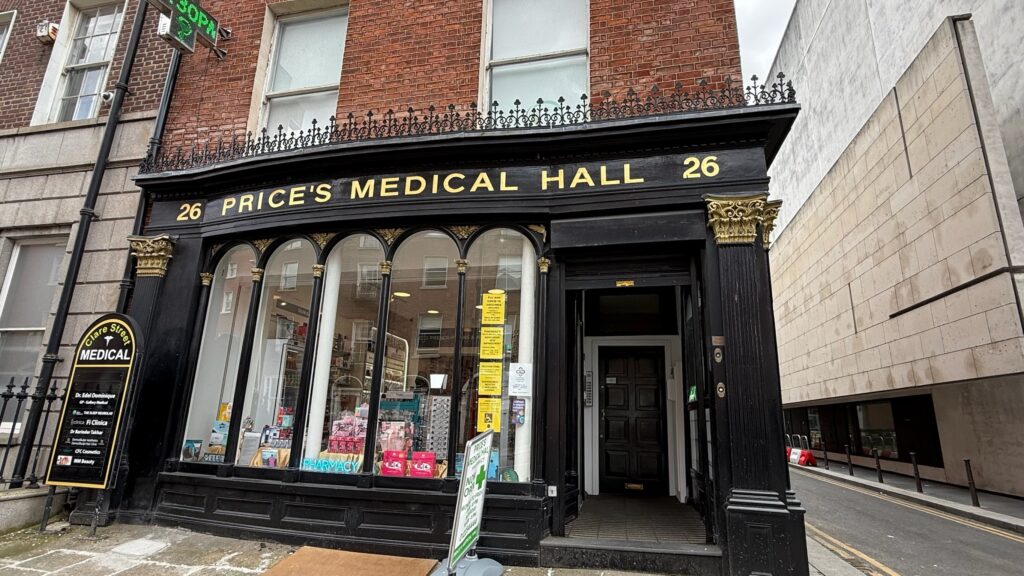
Nassau Street and Trinity College Dublin Views
From Nassau Street, we enjoy views towards buildings within the historic campus of Trinity College Dublin.
This section introduces one of Dublin’s most important educational and architectural landmarks. Trinity College has shaped the city for centuries, and its buildings, walls, gates and views are central to the character of this part of Dublin.
Rather than entering the campus in a rushed way, we pause to understand how Trinity sits within the wider city and how its architecture contributes to Dublin’s sense of place.
College Green
The tour finishes at College Green, one of the best places in Dublin to understand the connection between architecture, politics, finance and public life.
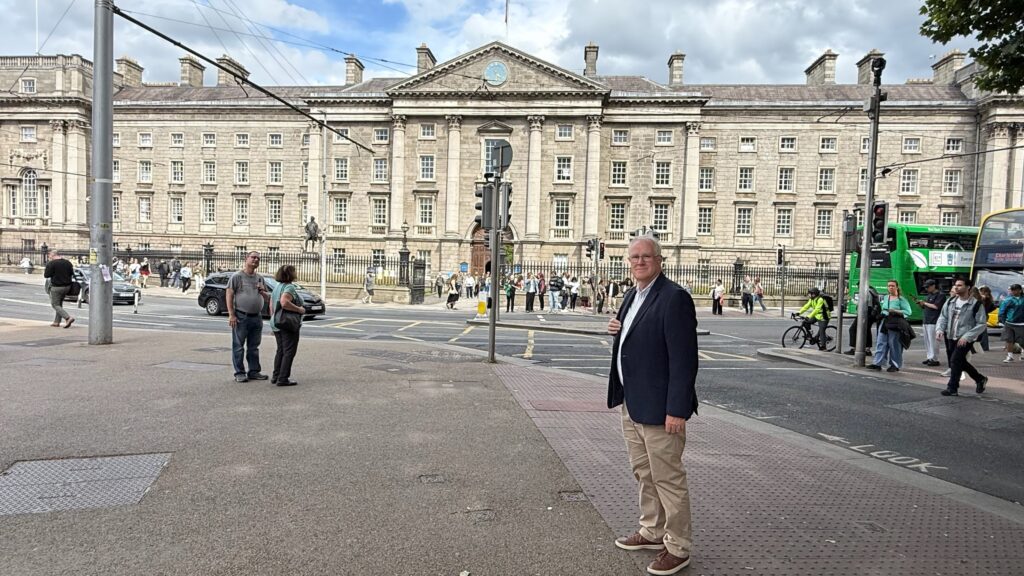
From here, we look towards Trinity College Dublin’s Front Gate, the former Irish Parliament House, now the Bank of Ireland, and the surrounding civic architecture. Few places in Dublin contain so many layers of meaning in such a compact space.
College Green brings together many of the themes explored during the walk: power, education, money, public space, national history and the changing identity of the city.
It is a fitting place to end a tour about Dublin told through buildings.
Tour Highlights
On this Dublin architecture walking tour, you will:
- Explore Dublin city centre through architecture, history, politics and culture
- Walk from St Stephen’s Green to College Green on an easy route of just over 2 km
- Discover Georgian Dublin, Merrion Square and elegant 18th-century streets
- See Leinster House, Government Buildings, the Shelbourne Hotel and College Green
- Visit hidden and overlooked places, including the Huguenot Cemetery
- Enjoy views of Trinity College Dublin and the former Irish Parliament House
- Learn how buildings reveal stories of power, wealth, identity and social change
- Understand Dublin beyond Temple Bar, pub culture and standard sightseeing routes
- Experience a thoughtful small-group walking tour designed for curious travellers
Book the Dublin Architecture Walking Tour
Who Is This Tour For?
This small-group Dublin walking tour is ideal for people who want to understand the city beyond the surface.
It is especially suited to first-time visitors who want a meaningful introduction to Dublin, as well as return visitors who have already seen the famous sights and want to go deeper. It is also perfect for culture lovers, history lovers, literary travellers, architecture enthusiasts and anyone interested in Georgian Dublin, historic streets and beautiful city details.
Photography lovers will enjoy the façades, doorways, fanlights, railings, streetscapes and hidden corners along the route. Visitors who prefer a thoughtful cultural experience over a pub crawl will find this tour a more refined and memorable way to explore the city.
The tour is also a wonderful option for locals who want to rediscover the Dublin they walk past every day. Many of the buildings on the route are familiar landmarks, but this walk helps reveal the stories, symbols and details that are easy to miss.
This is the Dublin you pass by every day but may never have truly noticed.
A Premium Cultural Experience for Private and Corporate Groups
This tour also works beautifully for small corporate groups, leadership groups, visiting executives, partners’ programmes, conference guests, alumni groups and professional visitors.
A Dublin architecture walk feels polished, cultural, intelligent and easy to organise. It is not too physically demanding, but it still offers a rich sense of place and a memorable introduction to the city.
For corporate groups, the tour can also be positioned as:
Dublin by Design: A Small-Group Architecture & Culture Walk
This version is ideal for company social events, incentive groups, international visitors, university groups, alumni groups and professional guests who want something more refined than a standard sightseeing tour.
The walk can be adapted for different interests, including Georgian Dublin, political history, cultural Dublin, public space, historic hotels, architecture and identity, or a broader introduction to the city.
Enquire About a Private or Corporate Tour
Why Join This Dublin Architecture Walking Tour?
This is not a technical lecture and it is not a rushed checklist of landmarks.
It is a story-led Dublin history walking tour that uses buildings as the starting point. The route has been designed to show how architecture can help explain the wider life of the city: its politics, class structures, public spaces, cultural institutions, social ambitions and changing identity.
You will see some of Dublin’s most elegant Georgian streets, important political landmarks, historic hotels, hidden burial grounds, Trinity College views and civic spaces. Along the way, you will hear about the people, decisions and events connected with this part of the city.
The aim is simple: to help you see Dublin differently.
After the tour, you may find yourself noticing buildings, streets, doors, details and public spaces that you would previously have walked past without a second glance.
Good to Know
This is an outdoor walking tour through Dublin city centre. The route is just over 2 km and follows city streets, squares and public spaces.
The tour does not require specialist architectural knowledge. It is designed to be engaging, accessible and enjoyable for anyone interested in Dublin’s history, culture, beautiful streets and hidden stories.
Please dress for the weather and wear comfortable shoes. Dublin weather can change quickly, so a rain jacket or umbrella is often useful.
The route includes public pavements, crossings, kerbs and some uneven surfaces typical of a historic city centre. Please contact us before booking if you have mobility or accessibility questions.
For guests interested in a wider private Dublin walking tour, a customised version can also be arranged. This can include places such as Dublin Castle, Christ Church Cathedral, St Patrick’s Cathedral, Temple Bar, the Liberties, O’Connell Street or other city landmarks, depending on your interests and available time.
Frequently Asked Questions
How long is the Dublin Architecture Walking Tour?
The route is just over 2 km and follows city streets, squares and public spaces from St Stephen’s Green to College Green. The full duration is 2-3 hours.
Where does the tour start?
The tour starts near Fusiliers’ Arch at the entrance to St Stephen’s Green. Full meeting point details will be provided after booking.
Where does the tour finish?
The tour finishes at College Green, close to Trinity College Dublin, the former Irish Parliament House and several city-centre transport links.
Do I need to know about architecture to enjoy the tour?
No. This tour is designed for curious visitors, locals and culture lovers. You do not need any specialist architectural knowledge. The tour is story-led, accessible and focused on understanding Dublin through its buildings and streets.
Is this tour suitable for first-time visitors to Dublin?
Yes. This is a great introduction to Dublin for first-time visitors who want something more meaningful than a standard sightseeing route. It introduces major themes in the city’s history while also pointing out details that are easy to miss.
Is this tour suitable for people who already know Dublin?
Yes. Many locals and repeat visitors enjoy this tour because it reveals stories behind familiar places. It is designed to help you notice the Dublin you may have walked past many times before.
What will I see on the tour?
You will see St Stephen’s Green, the Shelbourne Hotel, Huguenot Cemetery, Government Buildings, the Merrion Hotel buildings, Leinster House, Merrion Square, the National Gallery of Ireland, views of Trinity College Dublin and College Green.
Is this a private tour or a small-group tour?
This page is for the small-group Dublin architecture walking tour. Private tours and corporate group versions are also available on request.
Is the tour suitable for corporate groups?
Yes. This architecture and culture walk is ideal for visiting executives, leadership groups, conference guests, alumni groups, university groups and company social events. It offers a polished and memorable way to introduce guests to Dublin.
Can the route be customised?
Yes. Private versions of the tour can be customised to include additional Dublin landmarks such as Dublin Castle, Christ Church Cathedral, St Patrick’s Cathedral or other areas of the city.
Book Your Dublin Architecture Walking Tour
Discover Dublin through its buildings, streets and hidden stories on a thoughtful small-group walking tour from St Stephen’s Green to College Green.
Whether you are visiting Dublin for the first time, returning to the city, planning a cultural day out or organising a private group experience, this tour offers a richer way to understand the city.
Book the Dublin Architecture Walking Tour
Enquire About a Private Group Tour
What Guests Say
”The walking tour brought Dublin’s architecture to life—every corner told a story I never knew. Truly unforgettable!”